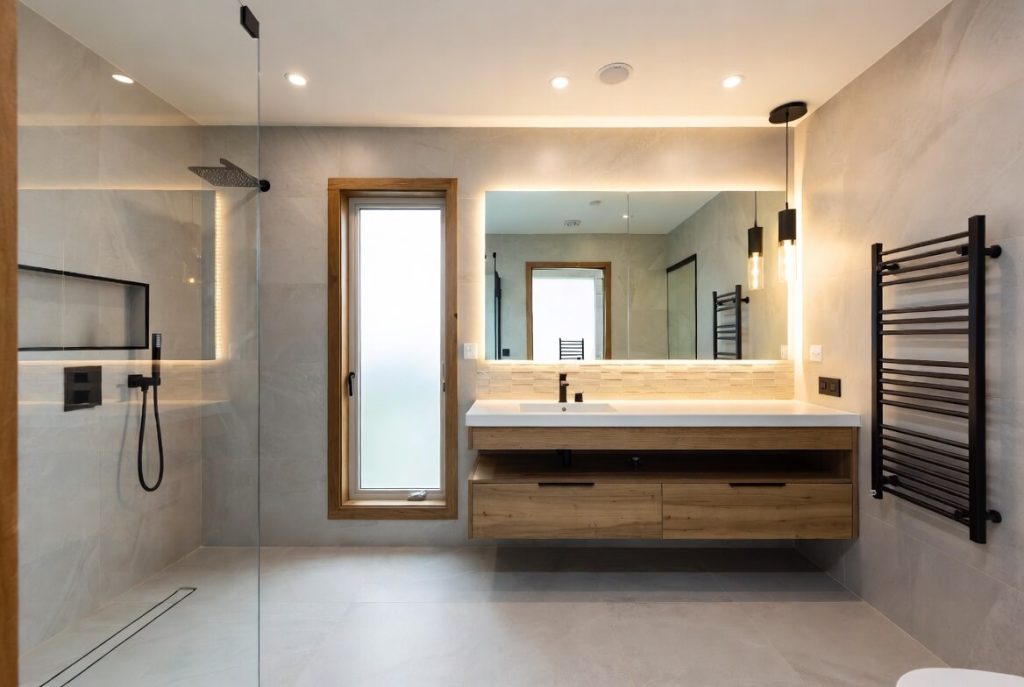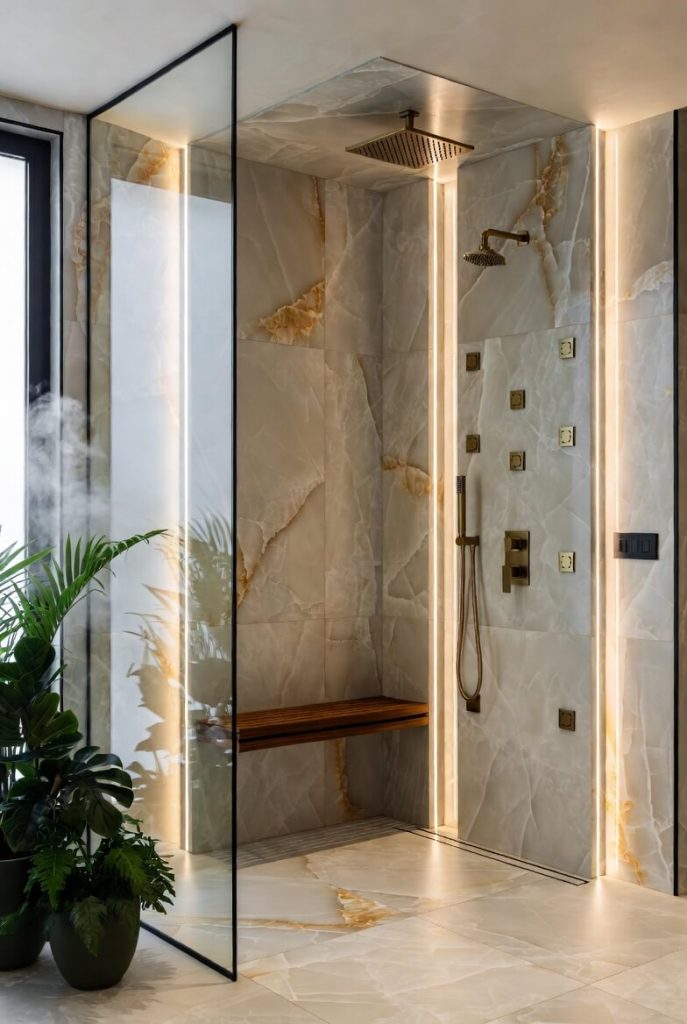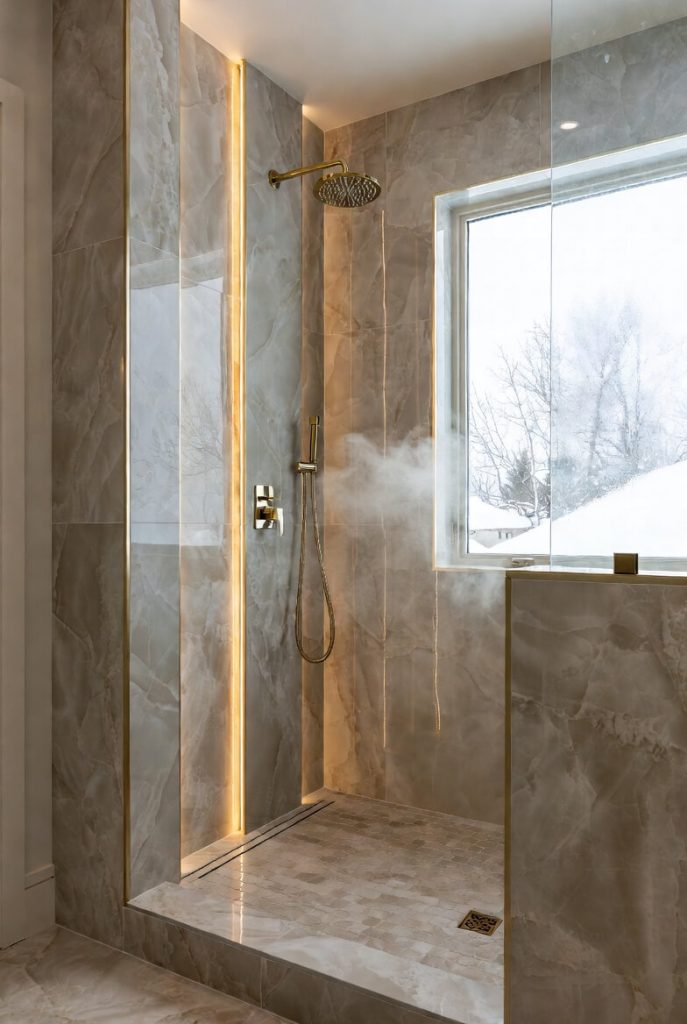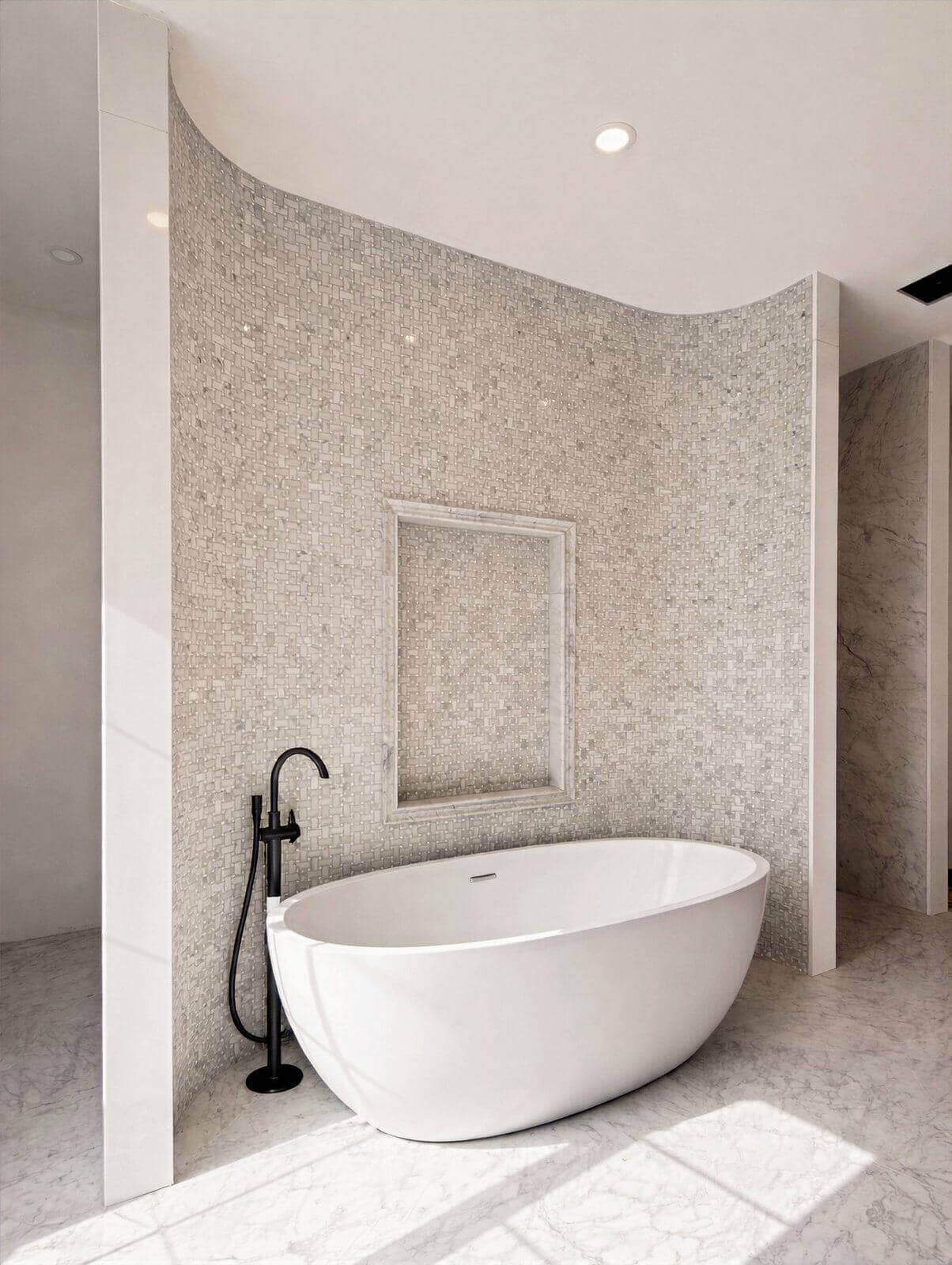

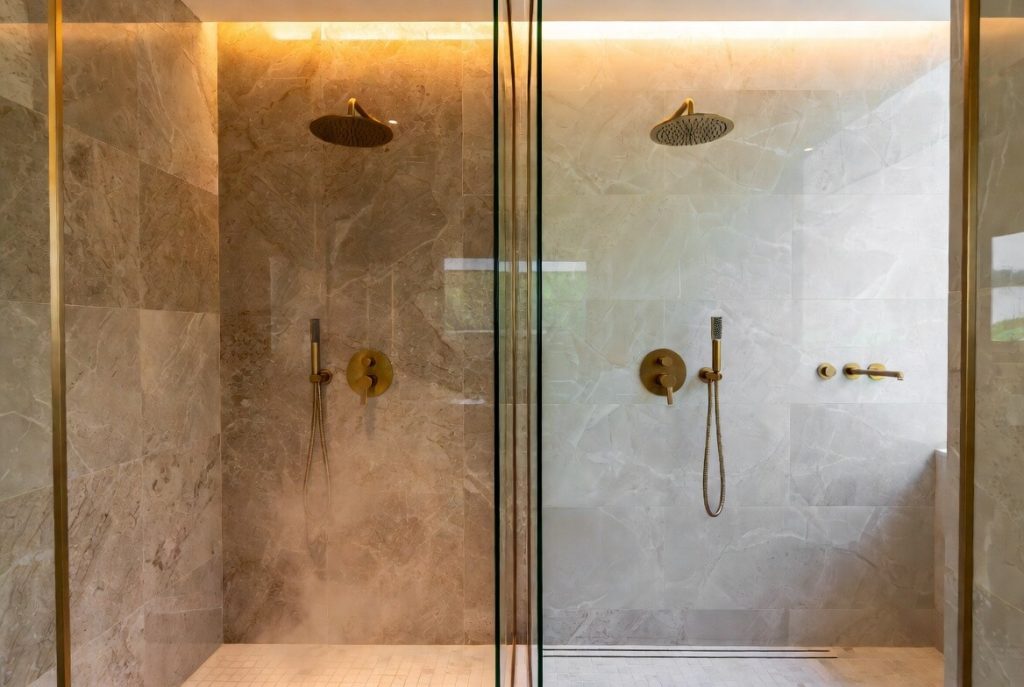
One of the most common questions we hear during in-home consultations is some version of: “Should we go with real stone, or tile that just looks like stone?” It’s a fair question – porcelain has come a long way, and at a glance, many buyers can’t tell the difference in a photo. But once you factor in cost, maintenance, and how each material behaves in a real Ontario home, the answer usually becomes clear. Here’s how we break it down for clients.
Natural Stone: Marble, Travertine, Slate, and More
Natural stone is quarried, not manufactured, which means no two pieces are exactly alike. That’s a big part of the appeal – the veining in a marble slab or the texture of travertine can’t be perfectly replicated.
Pros:
- Unmatched natural variation and depth
- Adds long-term resale value, especially in higher-end homes
- Ages with character rather than looking “dated”
Cons:
- Porous materials like marble and travertine need to be sealed regularly to resist staining and etching
- Softer stones can chip or scratch more easily than porcelain
- Generally a higher material and installation cost
- Slabs can vary in thickness, which takes a more experienced hand to level properly
Porcelain Tile: Engineered Consistency
Modern porcelain is manufactured using high-resolution printing and pressing techniques that reproduce the look of marble, concrete, or wood with impressive accuracy, especially in large-format panels.
Pros:
- Extremely low maintenance – no sealing required
- Highly resistant to scratching, staining, and moisture, which makes it ideal for showers and high-traffic floors
- More consistent sizing, which simplifies layout and large-format installations
- Typically more budget-friendly than natural stone
Cons:
- Even the best porcelain can’t fully replicate the subtle imperfections of real stone up close
- Cutting large-format porcelain requires specialized tools and a steady hand – this isn’t a forgiving material for a rushed installer
So Which Should You Choose?
For showers, bathroom floors, and kitchens – anywhere moisture and daily wear are a factor – we often steer clients toward porcelain for the durability and low upkeep. For feature walls, fireplaces, and lower-traffic accent areas, natural stone or stone veneer gives a richness that’s hard to beat.
Many of our favorite projects actually combine both: a porcelain floor with a natural stone or stone veneer feature wall as the visual centerpiece. It’s a practical way to get the durability where you need it and the character where you want it.
The Installation Matters More Than the Material
Here’s the part that often gets overlooked: even the best material will underperform with poor installation. Uneven substrate, inconsistent grout lines, or improper waterproofing will show up as problems within a year or two –regardless of whether you chose stone or porcelain. That’s why we spend as much time on prep work as we do on the finished surface.
Not sure which direction is right for your space? We’re happy to bring samples of both to your home and talk through what makes sense for your budget and lifestyle.