
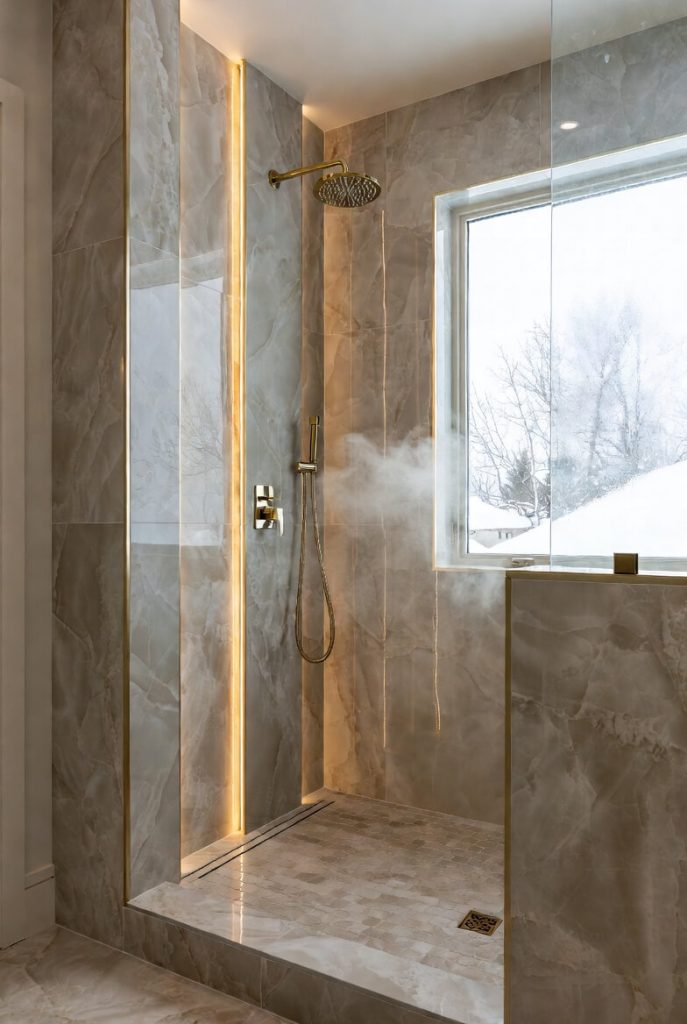
Barrie and the surrounding Simcoe region see some of the more demanding winters in southern Ontario – heavy snow, deep freezes, and constant freeze-thaw cycles that stress every part of a home, including the tile and stone you might not think about until something goes wrong. Whether it’s an exterior stone facade or an interior shower, winter has a way of exposing weak points in an installation. Here’s what to watch for and how to keep your surfaces performing well year-round.
Exterior Stone Veneer: Freeze-Thaw Is the Real Enemy
Stone veneer facades are built to handle Canadian winters, but only when the installation accounts for moisture management from the start. When water gets behind a stone veneer wall and freezes, it expands – and repeated freeze-thaw cycles can eventually crack the stone or push it away from the substrate.
What protects against this:
- A proper drainage plane and weather-resistive barrier behind the veneer
- Correctly installed weep screeds at the base to let moisture escape
- Sealed, well-maintained mortar joints with no gaps for water to collect
If you notice efflorescence (a white, chalky residue) on exterior stone, that’s usually a sign moisture is moving through the material – worth having looked at before it becomes a bigger issue.
Interior Tile: Temperature Swings and Grout
Indoors, the concern is less dramatic but still real. Homes in our region go through significant humidity and temperature swings between summer and winter, especially in older houses with less consistent insulation. This can cause slight expansion and contraction in flooring, which over time may show up as hairline grout cracks, particularly near thresholds and where tile meets another flooring material.
A few things that help:
- Using flexible, high-quality grout and appropriate movement joints (especially over large tiled areas)
- Making sure tile was set on a properly cured, stable substrate to begin with
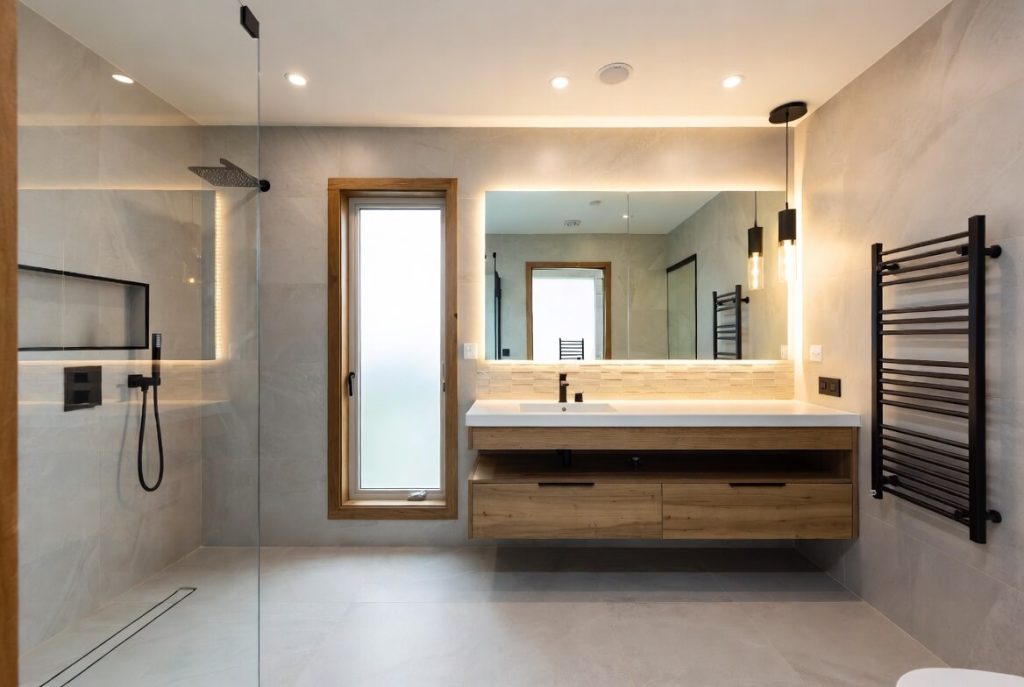
- Keeping bathroom exhaust fans running during and after showers, since trapped humidity in winter – when windows stay shut — is one of the fastest ways to stress grout and silicone seals
Heated Floors: Worth Considering If You’re Renovating
If you’re already planning a bathroom renovation, winter is exactly when clients tell us they wish they’d added in-floor heating. Installed underneath tile before grouting, it turns a cold winter bathroom floor into one of the more comfortable spots in the house – and it’s a relatively small addition to the cost of a full renovation since the floor is already being opened up.
A Quick Seasonal Checklist
- Fall: Check exterior stone joints and re-seal natural stone surfaces before the freeze sets in
- Winter: Keep bathroom fans on, wipe up standing water on tile floors near entryways, and watch for any new cracks in grout or exterior mortar
- Spring: Inspect exterior stone for any winter damage once the thaw is complete – small cracks are far easier to fix before they widen over another freeze-thaw cycle
When to Call a Professional
Small grout touch-ups are manageable as a DIY project, but cracked stone veneer, water intrusion, or shifting tile are signs the installation itself needs attention – not just the surface. Catching these early is almost always less costly than waiting.
If you’re noticing wear on your tile or exterior stone after this past winter, or you’re planning a renovation and want it built to actually handle Ontario weather, we’re happy to take a look.